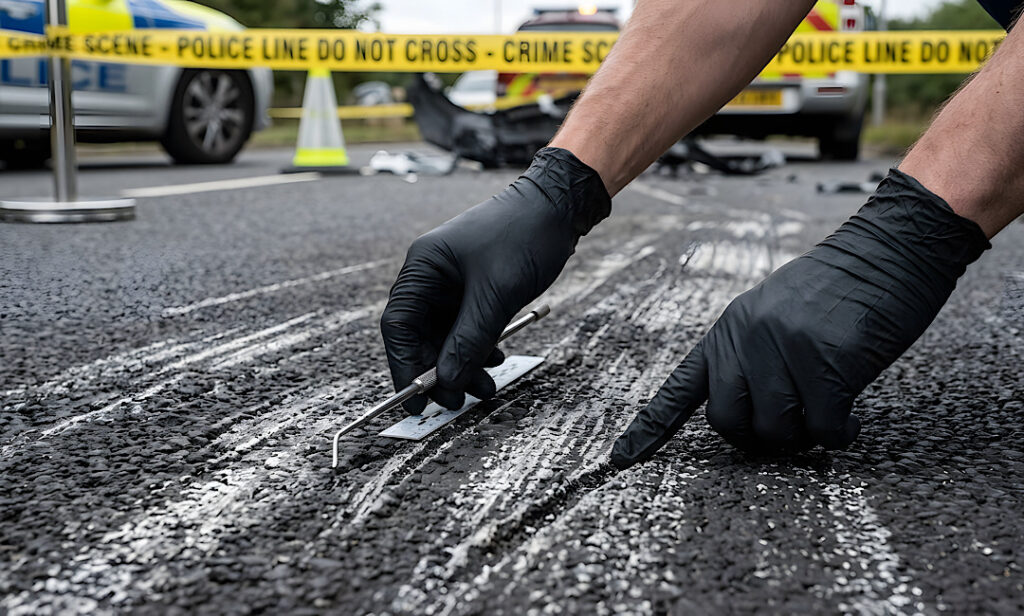
Athens car accident evidence often disappears faster than most people realize after a crash. Surveillance footage gets overwritten. Skid marks fade or get washed away. Witnesses move on and become harder to locate. Electronic data from the vehicles involved gets overwritten or lost. The window for preserving the evidence that can make or break a Georgia car accident claim is often measured in days and weeks, not months, and the people who act quickly are consistently better positioned than those who wait until they feel ready. At Hall and Collins Accident and Injury Lawyers, we work with Athens-area crash victims and their families to preserve critical evidence from the moment we are retained, and this guide covers what evidence matters, where to find it, and what steps to take right now if you have recently been in a crash in the Athens area.
This blog is for informational purposes only and does not constitute legal advice. If you have been in a crash in Athens or the surrounding area, contact our office for a free consultation as soon as possible.
Why Evidence Preservation Is Urgent After an Athens Car Accident
The urgency of evidence preservation after a car accident is not a legal formality. It is a practical reality driven by how quickly relevant evidence is lost, overwritten, or destroyed in the normal course of events.
Traffic and business surveillance cameras typically retain footage for twenty-four to seventy-two hours before it is automatically overwritten. A camera that captured the accident clearly on the day it happened may have no usable footage three days later. Event data recorder information from the vehicles involved, sometimes called black box data, can be overwritten by subsequent driving events. Witnesses who stopped at the scene and provided their contact information become harder to reach as time passes, and their memories of the specific details of what they saw begin to fade.
The at-fault driver's vehicle is another time-sensitive evidence source. Once a vehicle is repaired or sent to salvage, physical evidence of the damage pattern, the point of impact, and the mechanical condition of the vehicle at the time of the crash may be permanently lost. A formal spoliation letter sent to the at-fault driver and their insurer puts them on legal notice that the vehicle must be preserved as evidence and creates legal consequences if they allow it to be destroyed or repaired before inspection.
Acting quickly is not about being aggressive or adversarial. It is about protecting the factual record that allows your claim to be presented accurately and completely. Spoliation letters and event data recorder black box data after a Georgia car accident covers the formal evidence preservation steps that an attorney can take immediately after being retained.
The Georgia Crash Report: Your First and Most Important Document
The official Georgia crash report is the foundation document for any Georgia car accident claim. It contains the investigating officer's observations, the parties' identifying information and insurance details, witness names and contact information, the officer's preliminary assessment of contributing factors, and in many cases a diagram of the accident scene.
How to Get Your Athens Crash Report
In Athens, crash reports are available through several channels depending on which law enforcement agency responded to the accident. The Athens-Clarke County Police Department handles crashes within the city limits of Athens. The Georgia State Patrol handles crashes on state highways and interstates. University of Georgia Police may have jurisdiction for crashes on or near campus.
Georgia crash reports can be obtained through BuyCrash, which is Georgia's online crash report portal, or directly from the responding agency. The report is typically available within five to ten business days of the crash. You will need the report number, which should be on any documentation provided at the scene, or identifying information about the crash, including the date, location, and parties involved. How to get an Athens Georgia crash report through BuyCrash, ACCPD, UGA, and GSP and why it matters for your injury claim covers the specific process for obtaining your Athens crash report in detail.
How to Read Your Georgia Crash Report
Georgia crash reports use a standardized format that includes coded fields, overlay codes, and abbreviations that are not immediately intuitive to read. The GDOT 523 form, issued by the Georgia Department of Transportation, is the standard Georgia crash report, and understanding what the coded fields mean helps you evaluate whether the report accurately reflects what happened. How to read Georgia accident report overlay codes on the GDOT 523 provides a practical guide to reading Georgia crash reports and understanding what the codes mean for your claim.
If the crash report contains errors, inaccuracies, or omissions that affect how the accident is characterized, those errors can be addressed. An attorney can help you identify inaccuracies in the crash report and develop supplemental evidence that corrects the record, because the crash report is evidence in your claim but it is not the only evidence and it is not conclusive.
Surveillance and Camera Footage: Act Within Hours
Surveillance and traffic camera footage is one of the most valuable categories of car accident evidence and one of the most time-sensitive. Cameras that may have captured the accident include traffic signal cameras operated by the Georgia Department of Transportation or Athens-Clarke County, private business security cameras at locations near the accident scene, dashcam footage from vehicles involved or from bystander vehicles, doorbell and residential security cameras if the accident occurred near a residential area, and GDOT traffic monitoring cameras along major Athens corridors.
Identifying which cameras may have captured the accident requires thinking about the specific location of the crash and what businesses, intersections, and properties are in the surrounding area. A crash at a major Athens intersection is more likely to be captured by traffic signal cameras than a crash on a rural road, but both warrant investigation of nearby camera sources.
Preserving camera footage requires prompt action because most systems overwrite on short cycles. An attorney can send preservation letters to businesses and government entities within hours of being retained, putting them on notice that the footage must be preserved and requesting immediate production. Once footage is overwritten, it is typically gone permanently.
911 Calls, Body Camera Footage, and Police Records
The 911 call made to report the accident is a contemporaneous record of how the accident was reported in the immediate aftermath. It may contain statements about what happened, who was at fault, the conditions at the scene, and the injuries involved that are relevant to how the accident is characterized in the claim.
Body camera footage from the responding officers captures the scene as it appeared when law enforcement arrived, the statements made by the parties and witnesses at the scene, the physical condition of the injured parties, and the officers' observations and investigation. This footage can be critical in cases where the parties' accounts of the accident conflict significantly.
Both 911 recordings and body camera footage are public records in Georgia that can be requested through formal records requests, but they are subject to retention schedules that mean they may not be available if the request is delayed too long. The Athens car accident evidence checklist for requesting 911 calls, body cam footage, police records, and Georgia records covers the specific records request process for Athens-area crash evidence in detail.
Event Data Recorder and Electronic Vehicle Data
Modern vehicles contain event data recorders that capture pre-crash data, including vehicle speed, throttle position, brake application, steering input, and, in some vehicles, additional parameters in the seconds before impact. This data can be extraordinarily valuable in crash cases because it provides an objective, vehicle-generated record of what the vehicles were doing immediately before the collision that is not subject to the memory limitations and potential bias of human witness accounts.
Accessing EDR data requires specialized equipment and expertise. The data can be downloaded by accident reconstruction experts using manufacturer-specific tools, and the download needs to happen before the data is overwritten by subsequent driving events or before the vehicle is repaired or destroyed. Sending a spoliation letter to the at-fault driver and their insurer immediately after the crash puts them on notice that the vehicle and its electronic data must be preserved.
Your own vehicle's EDR data may also be relevant, both as evidence of your driving behavior before the crash and as a record of the impact forces involved. Understanding what your vehicle's data shows before the insurer accesses it is part of a complete evidence strategy.
Witness Information and Statements
Witnesses who saw the accident happen can provide testimony that supports or clarifies the liability case in ways that the physical evidence alone cannot. A witness who saw the at-fault driver run a red light, fail to yield, or engage in distracted driving provides direct evidence of negligent conduct that is often more compelling to a jury than technical accident reconstruction alone.
Witness information collected at the scene, including names and contact information, is valuable but needs to be followed up quickly. Witnesses who are willing to cooperate in the days after an accident may become harder to reach as time passes, and their specific recollection of details fades over time even when their general memory of the event remains intact.
If witnesses were identified at the scene, contacting them promptly to take a detailed statement while their memory is fresh preserves their account in a form that can be used throughout the claim process. If you did not get witness information at the scene, identifying potential witnesses through canvassing the area, reviewing social media for posts about the accident, and following up with responding officers about their witness documentation are steps an attorney can take to identify witnesses after the fact.
Medical Records and Bills: The Documentation Foundation of Your Damages Claim
Your medical records and bills are the primary documentation of your injuries and their financial impact. Building a complete and organized medical records file is foundational to the damages side of your claim.
Medical records to collect and preserve include emergency room records and imaging from the date of the accident, records from every treating physician, specialist, physical therapist, chiropractor, and other healthcare provider involved in your care, all diagnostic imaging, including X-rays, CT scans, and MRI studies with the radiologist's reports, prescription records, and records of any mental health treatment related to the accident.
Medical bills from every provider need to be collected and organized, including itemized bills that show the specific services rendered rather than just the total amount charged. Health insurance explanation of benefits documents showing what was paid and what adjustments were made are also relevant to the damages calculation.
Gaps in medical records, meaning periods where you did not seek treatment, are one of the most commonly exploited weaknesses in Georgia accident claims. Insurers argue that gaps in treatment indicate the injuries were not serious or that you recovered during the gap period. Consistent, documented treatment through the full course of your recovery is both medically appropriate and legally important to the strength of your claim. How to document an injury for a stronger case in Georgia covers the documentation practices that support strong injury claims.
Employment Records and Income Documentation
Lost income is a significant component of many Georgia car accident claims, and documenting it requires more than a general statement that you missed work. Employment records that support a lost income claim include pay stubs from before the accident showing your regular earnings, a letter from your employer confirming the dates you were unable to work and the income lost during that period, tax returns for the prior two to three years if self-employed or if your income varied, and documentation of any benefits such as sick leave or vacation time that you were forced to use because of the accident.
For self-employed individuals, documenting lost income requires business records including invoices, contracts, bank statements, and tax returns that establish the income the business was generating before the accident and the reduction in income during the recovery period. The documentation requirements for self-employment income are more complex than for salaried employees, and organizing this documentation carefully is important to presenting a credible lost income claim.
Property Damage Documentation
Property damage documentation supports the vehicle damage side of your claim and can also serve as evidence of the force of the impact in the personal injury case. Photographs of your vehicle taken immediately after the accident, before any repairs are made, capture the damage in its most complete and unaltered state.
If your vehicle is taken to a repair facility, obtain the repair estimate and any documentation of parts replaced and labor performed. If your vehicle is declared a total loss, the insurer's actual cash value determination and any comparable vehicle listings you develop to challenge it are part of the property damage record.
Georgia law also recognizes diminished value as a compensable property damage claim, meaning the reduction in your vehicle's market value that persists even after professional repairs because of its accident history. The diminished value claim process in Georgia and how Athens drivers can recover more after a wreck covers the diminished value claim process for Georgia drivers.
The Athens-Area Evidence Checklist: What to Do Right Now
If you have recently been in a crash in the Athens area, here is a practical action sequence organized by urgency.
Within the first twenty-four hours, photograph the accident scene, all vehicles involved, your injuries, and any physical evidence at the scene if you have not already done so. Collect the names and contact information of any witnesses. Note the names and badge numbers of responding officers and ask for the report number. Write down your own account of what happened while the details are fresh. Note the presence of any nearby businesses or cameras that may have captured the accident.
Within the first few days, contact an attorney so that spoliation letters can be sent before evidence is lost, formal records requests can be submitted for camera footage and police records, and witness contact can be initiated. Seek medical evaluation if you have not already done so. Decline to give a recorded statement to any insurer without first speaking with an attorney.
In the weeks that follow, collect all medical records and bills from every provider as treatment progresses. Document your symptoms, limitations, and the impact of the injuries on your daily life through a personal injury journal that records how you are feeling and what you cannot do each day. Organize employment records documenting missed work and income loss. Preserve all communications with insurers in writing.
Frequently Asked Questions About Athens Car Accident Evidence and Records
How long does Athens-Clarke County keep police body camera footage from accident scenes?
Retention schedules for body camera footage vary by department and by the nature of the recorded event. Footage from accident investigations may be retained for a defined period ranging from several months to longer, depending on whether the footage is flagged as potentially relevant to a legal matter. Submitting a formal public records request promptly after the accident, and having an attorney send a preservation letter to the department is the approach that protects against the footage being deleted before it can be obtained.
Can I request the 911 call recording from my accident?
Yes. Georgia 911 call recordings are public records that can be requested through the appropriate agency. In Athens-Clarke County, 911 calls are processed through the Athens-Clarke County 911 center. A formal open records request should be submitted promptly because retention periods for 911 recordings vary, and older recordings may not be available. An attorney can submit this request on your behalf as part of the evidence preservation process.
What if the at-fault driver's vehicle has already been repaired or destroyed?
If the vehicle was repaired or destroyed before a spoliation letter was sent and before your attorney had an opportunity to inspect or download the EDR data, the options depend on whether the at-fault driver or their insurer was on notice of your claim before the vehicle was altered. If a spoliation letter was sent and the vehicle was destroyed or repaired anyway, the court may instruct the jury that they can draw an adverse inference from the destruction of evidence. If no notice had been given, the options are more limited, but other evidence, including photographs, the crash report, and accident reconstruction, may still establish the liability case.
Do I need to keep my damaged vehicle before it is repaired or totaled?
Yes, if at all possible. Your vehicle is physical evidence of the impact and the damage pattern. Before authorizing repairs or allowing your vehicle to be sold as salvage after a total loss declaration, ensure that comprehensive photographs have been taken and consider whether an inspection by an accident reconstruction expert is warranted, given the nature of your claim. Notify your attorney before releasing the vehicle for repair or salvage.
What should I include in a personal injury journal after an Athens car accident?
A daily personal injury journal should record your symptoms and pain levels each day, the activities you were unable to perform or had to modify because of the injuries, medical appointments attended, and any significant developments in your treatment, the emotional and psychological impact of the injuries including sleep disruption, anxiety, and mood changes, and any other way the injuries have affected your daily life and relationships. This contemporaneous record of how the injuries affected you day by day is valuable evidence of the non-economic damages component of your claim and is much more credible than general testimony about how you felt months or years after the accident.
Where can I get help preserving evidence and building my Athens car accident claim?
Hall and Collins Accident and Injury Lawyers works with Athens-area crash victims to preserve evidence, obtain records, and build complete, well-documented claims from the earliest stages after an accident. Contact our office as soon as possible after a crash to protect the evidence that supports your claim.
Act Now to Protect the Evidence That Protects Your Claim
Protecting Athens car accident evidence early is one of the most important steps you can take after a crash. The evidence that makes Georgia car accident claims succeed is time-sensitive in ways that most people do not fully appreciate until some of it is already gone. The steps you take in the days immediately after an Athens area crash determine what evidence is available to support your claim throughout the process. Hall and Collins Accident and Injury Lawyers is here to help Athens crash victims act quickly, preserve what matters, and build the strongest possible foundation for their claim from day one. Call (706) 351-6055 or contact us online for a free consultation.
This blog is for informational purposes only and does not constitute legal advice. Every case is different. Contact Hall and Collins Accident and Injury Lawyers to discuss the specific facts of your situation.
