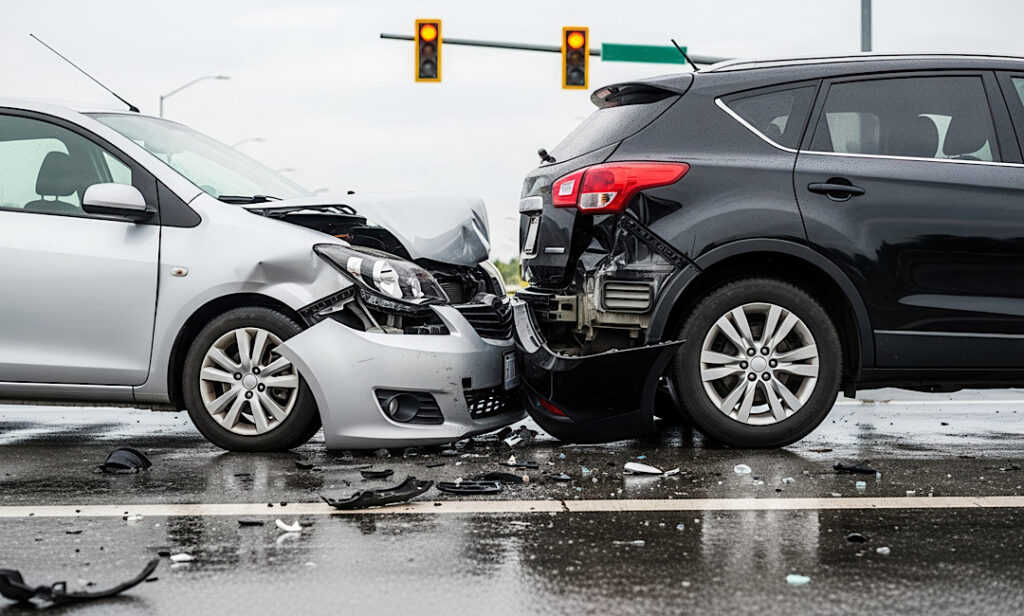
Georgia car accident types are not all treated the same way under state law. The type of crash you were in, where it happened, who had the right of way, and what the physical evidence shows all affect how fault is analyzed, how liability is established, and ultimately what your claim is worth. Georgia drivers who understand how their specific crash type affects the fault analysis are better prepared to evaluate what the insurer is telling them, recognize when fault is being incorrectly assigned, and make informed decisions about whether to pursue a claim. At Hall and Collins Accident and Injury Lawyers, we represent Athens-area accident victims across every type of crash, and this guide covers the fault and liability considerations that matter most in the crash types we see most frequently.
This blog is for informational purposes only and does not constitute legal advice. Georgia law is specific and fact-dependent. Contact our office for a free consultation to discuss your situation.
How Crash Type Affects the Georgia Fault Analysis
Georgia is an at-fault state, meaning the driver who caused the accident bears legal responsibility for the resulting damages. But fault is rarely as simple as pointing at one driver and saying they caused the crash. Georgia's modified comparative negligence rule under O.C.G.A. Section 51-12-33 allows fault to be divided among multiple parties, and the percentage of fault assigned to each party directly affects their recovery.
If you are found to be less than fifty percent at fault, your recovery is reduced by your percentage of fault. If you are found to be fifty percent or more at fault, you are barred from recovering anything from the other party. This means that how fault is allocated between the parties is not just a technical legal question. It is a financial question that determines whether you recover at all and how much you recover if you do.
The type of crash you were in establishes the initial fault framework, meaning the presumptions, rules, and evidence that bear on how fault is analyzed in that specific scenario. Understanding the fault framework for your crash type helps you evaluate whether the insurer's fault allocation is accurate or whether fault is being shifted to you in ways that are not supported by the evidence or Georgia law. Understanding Georgia's at-fault car accident system provides the foundational framework for how fault works in Georgia before diving into specific crash types.
Rear-End Collisions in Georgia: The Fault Presumption and When It Can Be Challenged
Rear-end collisions are the most common type of car accident in Georgia, and they carry a well-established fault presumption that affects how these cases are analyzed from the beginning.
The Rear-End Fault Presumption in Georgia
Under Georgia law, a driver who rear-ends another vehicle is presumed to have been negligent. The legal basis for this presumption is the duty to maintain a safe following distance under O.C.G.A. Section 40-6-49, which requires drivers to not follow more closely than is reasonable and prudent given the speed of the vehicles, traffic conditions, and road conditions. A driver who cannot stop before hitting the vehicle in front of them has, by definition, been following too closely or driving too fast for conditions.
This presumption is significant in practical terms because it shifts the initial burden in the fault analysis. The rear driver is presumed at fault, and rebutting that presumption requires affirmative evidence that the front driver's conduct caused or substantially contributed to the collision in a way that a reasonable driver could not have avoided.
When the Rear-End Presumption Can Be Rebutted
The rear-end fault presumption is rebuttable, meaning it can be overcome by sufficient evidence. Circumstances that may support a challenge to the presumption include the front driver making a sudden and completely unexpected stop without any warning in a situation where stopping was not required, the front driver cutting off the rear driver with insufficient space to stop, the front driver's brake lights being non-functional so the rear driver had no warning of deceleration, and other conduct by the front driver that created a situation the rear driver could not reasonably have anticipated or avoided.
It is important to note that these rebuttal arguments have limits. Georgia courts have consistently held that the rear driver's obligation to maintain a safe following distance means that many situations insurers present as rebuttal arguments, such as the front driver braking more quickly than expected in traffic, do not actually overcome the presumption because a driver maintaining proper following distance should be able to stop in normal traffic conditions. Rear-end collisions in Georgia and understanding the fault presumption and how it can be challenged covers the legal standards for this presumption and how it plays out in Georgia accident claims.
Evidence That Matters in Georgia Rear-End Collision Cases
In rear-end collision cases, the evidence that bears most directly on the fault analysis includes the following distance and speed of both vehicles in the moments before the crash, the brake light functionality of the front vehicle, the crash report's characterization of contributing factors, event data recorder information from both vehicles showing speed and brake application, witness accounts of driving behavior before the impact, and any evidence of distracted driving by the rear driver such as cell phone records. Who pays for rear-end collisions in Georgia covers the insurance and liability questions specific to rear-end crashes.
Left-Turn Accidents in Georgia: Fault, Yielding, and the Exceptions That Apply
Left-turn accidents are among the most serious crashes on Georgia roads because they typically involve a turning vehicle being struck by oncoming traffic at relatively high closing speeds. They are also crashes with a well-established fault framework that begins with a strong presumption against the turning driver.
The Left-Turn Fault Framework Under Georgia Law
Georgia law requires drivers making a left turn to yield to oncoming traffic that is close enough to constitute a hazard under O.C.G.A. Section 40-6-71. A driver who turns left in front of oncoming traffic and causes a collision has violated this duty to yield, and the fault presumption runs strongly against the turning driver as a result.
This presumption reflects the practical reality that the driver making the left turn controls the timing of the maneuver and has the obligation to ensure the turn can be completed safely before beginning it. A driver who turns when oncoming traffic is too close to stop has made a judgment error about whether the turn was safe to execute.
When the Left-Turn Fault Presumption Can Be Challenged
The left-turn fault presumption can be challenged when the oncoming driver was speeding significantly at the time of the crash, making it impossible for the turning driver to accurately assess the time available to complete the turn at the oncoming driver's actual speed. It can also be challenged when the oncoming driver ran a red light or other traffic control device, meaning the turning driver had a green light or a protected turn signal and reasonably relied on the other driver complying with traffic controls.
These exceptions require evidence. Speed at impact can be established through event data recorder data, accident reconstruction analysis, and witness accounts. Red light running can be established through traffic camera footage, witness testimony, and physical evidence of the collision point relative to the intersection. Left-turn failure to yield accidents in Georgia and how fault is proven and how to protect your claim covers the fault analysis in left-turn crash cases in detail.
Left-Turn Accidents and Protected Turn Signals
Left-turn crashes at signalized intersections where a protected left-turn signal is present involve a different analysis than unprotected left-turn situations. A driver making a left turn on a protected green arrow has a protected right of way, and an oncoming driver who enters the intersection on a red light and causes a collision bears the fault for the crash. Establishing which signal phase was active at the time of the collision requires traffic signal timing data from the signal controller, which is another time-sensitive evidence source that needs to be requested promptly before it is overwritten or lost.
Intersection Crashes in Georgia: Right-of-Way, Traffic Controls, and the T-Bone Collision
Intersection crashes are a broad category that includes any collision occurring at or near an intersection, but the fault analysis varies significantly depending on the type of intersection, the traffic controls present, and the specific manner in which the collision occurred.
Signalized Intersections and Red Light Violations
At signalized intersections, the fault analysis in a crash case typically turns on which driver had the green light and which driver violated the traffic signal. A driver who runs a red light and causes a T-bone collision with a driver who had a green light bears clear fault for the crash under Georgia law.
Proving red light violations requires evidence that establishes what signal each driver faced at the time of the crash. Traffic camera footage is the most direct evidence, but traffic signal timing data, witness testimony, and physical evidence of where the impact occurred within the intersection can also establish signal compliance or violation. Three factors that make intersections dangerous places in Georgia covers the broader intersection safety context that is relevant to understanding why these crashes happen.
Stop Sign Intersections and Failure to Yield
At uncontrolled intersections and stop sign-controlled intersections, the fault analysis turns on right-of-way rules and compliance with stop requirements. A driver who fails to stop at a stop sign and enters an intersection causing a collision has violated O.C.G.A. Section 40-6-72 and bears fault for the resulting crash. A driver who stops at a stop sign and yields appropriately but is struck by a driver who failed to yield has a strong fault case against the other driver.
The complication in stop sign intersection cases is often that both drivers may claim they had the right of way, that the other driver did not stop, or that they stopped and yielded before entering the intersection. Physical evidence including skid marks, the point of impact within the intersection, vehicle damage patterns, and witness accounts are critical to establishing what actually happened at the intersection.
T-Bone Collisions and Side-Impact Crashes
T-bone or side-impact collisions at intersections are among the most injurious crash types because the striking vehicle hits the occupant compartment directly with limited structural protection compared to front or rear impact. The fault analysis in a T-bone crash turns on who had the right of way at the intersection where the collision occurred. Who is at fault for a T-bone accident in Georgia covers the fault considerations specific to side-impact intersection crashes.
The injury severity in T-bone collisions, particularly for occupants on the struck side of the vehicle, frequently produces serious orthopedic injuries, traumatic brain injuries, and in higher-speed impacts catastrophic or fatal outcomes. The seriousness of these injuries makes thorough liability investigation and complete damages documentation particularly important in T-bone crash cases.
Head-On Collisions in Georgia: Fault and Catastrophic Injury Considerations
Head-on collisions are statistically among the most deadly crash types because both vehicles' speeds combine at impact, producing forces that far exceed what structural safety systems are designed to manage at higher speeds. Head-on collisions in Georgia most commonly result from a driver crossing the centerline, driving the wrong way on a road or highway, attempting to pass unsafely, or losing control due to impairment, distraction, or medical emergency.
Fault in head-on collision cases is generally clear in terms of which vehicle crossed into the opposing lane, but establishing why that happened, and whether any other factors contributed, is important both for the liability case and for any potential punitive damages analysis. A driver who crossed the centerline because they were impaired presents a different damages picture than one who crossed because of a sudden and unforeseeable medical emergency. Head-on car collisions in Georgia and the fault and damages considerations covers the legal framework for these serious crash cases.
Distracted Driving Crashes: Proving What the Driver Was Doing
Distracted driving crashes do not fit neatly into a single collision type because distraction can be a contributing factor in rear-end crashes, intersection crashes, left-turn crashes, and virtually any other crash type. What makes distracted driving cases distinct is the evidentiary challenge of proving that the at-fault driver was distracted at the time of the crash and the potential for enhanced damages when the distraction was particularly reckless.
Cell phone records, including call logs, text message records, and data usage logs, can establish whether a driver was using their phone in the moments before the crash. These records are subpoenable in litigation and can be requested through formal legal process, but the request needs to be made before the records are deleted pursuant to the carrier's standard retention schedule. How distracted driving cases are handled in Athens covers the evidentiary and legal considerations specific to distracted driving crash cases in the Athens area.
Multi-Vehicle Crashes and Complex Fault Scenarios
Some Georgia car accidents involve more than two vehicles, creating more complex fault scenarios where multiple drivers may have contributed to the chain of events that caused the collision. In multi-vehicle crashes, Georgia's comparative fault system allows fault to be apportioned among all contributing parties, and each party's percentage of fault affects their ability to recover and the amount they can recover.
Multi-vehicle crashes require thorough accident reconstruction analysis to establish how the sequence of events unfolded, which impacts occurred in which order, and how each driver's conduct contributed to the overall crash. The complexity of these cases makes early evidence preservation and prompt legal representation particularly important because the liability analysis requires a complete and accurate reconstruction of a complicated sequence of events.
How Crash Type Affects the Injury and Damages Picture
Different crash types produce different injury patterns, and understanding the relationship between crash type and injury helps frame the damages analysis in a Georgia accident claim.
Rear-end collisions are strongly associated with cervical spine injuries, including whiplash-type soft tissue injuries and herniated discs, because the rear impact causes rapid acceleration of the occupant's head and neck relative to the torso. Even relatively low-speed rear-end impacts can produce significant cervical spine injuries in vulnerable individuals, and the absence of vehicle damage is not a reliable indicator of the absence of injury.
Left-turn and T-bone collisions frequently produce more severe injuries than rear-end crashes because of the direct lateral impact to the occupant compartment. Orthopedic injuries, traumatic brain injuries, and internal injuries are more commonly associated with side-impact and frontal crashes than with rear impacts in equivalent speed ranges.
Head-on collisions at higher speeds produce catastrophic injury patterns including severe traumatic brain injury, spinal cord injury, multiple orthopedic fractures, and internal organ injury that require extensive medical care and produce permanent limitations in many cases. The damages in serious head-on collision cases often involve future medical care costs and lost earning capacity that extend over the injured person's remaining lifetime. The Georgia car accident injuries and damages guide for Athens residents covers how injury type and severity affect claim value in Georgia accident cases.
Frequently Asked Questions About Georgia Car Accident Types and Fault
If I was rear-ended in Georgia, is the other driver automatically at fault?
The other driver is presumed at fault under Georgia's rear-end fault presumption, but the presumption is rebuttable. In the vast majority of rear-end cases the rear driver bears fault because the duty to maintain a safe following distance is a clear legal obligation, but the at-fault driver's insurer may attempt to argue that your conduct contributed to the crash. Understanding the legal standard for rebutting the presumption helps you evaluate whether any fault being assigned to you is legally supported.
I was making a left turn and was hit by an oncoming driver who was speeding. Am I still at fault?
Possibly not entirely, and possibly not at all depending on the specific facts. If the oncoming driver was speeding significantly enough that a reasonable driver in your position could not have accurately assessed the time available to complete the turn safely, the speeding driver's conduct may be a significant contributing factor to the crash. Establishing the oncoming driver's speed requires evidence including event data recorder data, accident reconstruction analysis, and witness accounts. This is a fact-specific analysis that requires legal evaluation of the specific circumstances.
What evidence is most important in an intersection crash case?
Traffic camera footage showing which driver had the green light or the right of way is the most direct evidence in signalized intersection cases, but it needs to be requested immediately before it is overwritten. Traffic signal timing data, witness testimony, the crash report's characterization of contributing factors, physical evidence of the point of impact within the intersection, and event data recorder information from the vehicles involved are all relevant. The specific evidence that matters most depends on the type of intersection and the specific disputed facts.
Can I recover damages if I was partially at fault for the crash?
Yes, as long as your fault is less than fifty percent under Georgia's modified comparative negligence rule. Your recovery is reduced by your percentage of fault, but you can still recover the remaining portion of your damages from the other at-fault party. If you are found to be fifty percent or more at fault, you cannot recover from the other party. How fault is allocated between the parties is often the central dispute in Georgia accident claims, and the specific crash type affects the starting point for that analysis.
How does the type of crash affect the value of my injury claim?
Crash type affects injury value in two primary ways. First, different crash types produce different injury patterns, and the nature and severity of injuries are the primary driver of claim value. Second, crash type affects the strength and clarity of the liability case, and a clear liability case with strong supporting evidence produces better claim outcomes than a disputed liability case where fault is genuinely uncertain. Understanding how your specific crash type affects both the injury pattern and the liability analysis helps you evaluate whether your claim is being valued correctly.
Where can I get help understanding how my specific crash type affects my Georgia claim?
Hall and Collins Accident and Injury Lawyers provides free consultations to Athens-area accident victims who want to understand how the specific facts of their crash affect their legal options. Contact our office to speak with an attorney about your crash, the fault analysis that applies, and what recovery may be available to you.
Talk to an Athens Car Accident Attorney About Your Specific Crash
Understanding the different Georgia car accident types is the first step, but every crash is unique. Understanding the general fault framework for your crash type is a useful starting point, but applying that framework to the specific facts of your accident, your injuries, and the available evidence requires legal analysis of your particular situation. Hall and Collins Accident and Injury Lawyers represent Athens-area accident victims across every type of crash with the Georgia-specific legal knowledge and practical experience that makes a difference in how claims are valued and resolved. We handle Georgia car accident cases on a contingency fee basis, meaning you pay nothing unless we recover for you. Call (706) 351-6055 or contact us online for a free consultation.
This blog is for informational purposes only and does not constitute legal advice. Georgia law is specific and fact-dependent. Contact Hall and Collins Accident and Injury Lawyers to discuss the specific facts of your situation.
